

Tips for Choosing the Right Small Appliances for Your Commercial Kitchen
So many restaurant owners focus on going big, from equipment like ranges, ovens and walk-in freezers to the efforts staff members make to please customers. But you might not think as much about the smaller tools that stock the shelves and cabinets. After all, chefs require small kitchen appliances for the more delicate procedures that perfect their dishes.
We talked with restaurant professionals about what matters most when buying these smaller but mighty pieces of kitchen equipment.
What to Buy
Chef David Santos, owner of Louro in New York, NY, suggests building a collection of multi-taskers that can handle multiple functions. For example, his list of essential small kitchen appliances includes a good blender, which he uses for purees and sauces, and an ice cream maker, which he uses for mousses and pâté.
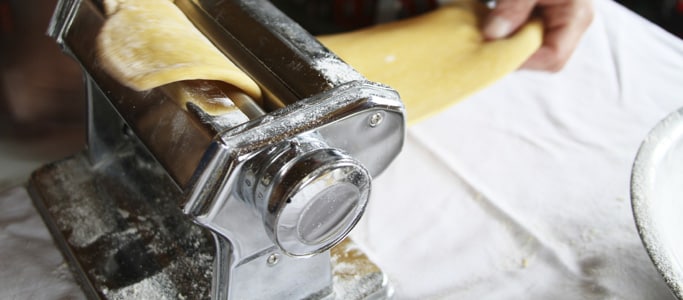
Single-taskers like panini makers or waffle griddles also make the cut when they’re vital to your menu. At Louro, beef and sausage are among the favorites and, as such, Santos pledges allegiance to a meat grinder, “because without it we could not make some of our most popular dishes.” He’s also partial to a pasta machine, “because everyone loves pasta and you can do a lot with it. It makes tons of different shapes and even more when you add attachments.”
For Paul Choi, the executive chef at Karma Asian Food & Fine Wine in Mundelein, IL, a good automatic rice cooker is crucial to his restaurant’s repertoire. But, like Santos, he’s also big on versatile tools like a stand mixer. “It’s great for small batches of dough, compound butters and whipped cream. It takes up very little space and does many things, from rolling out pasta to grinding meat.”
What to Look For
No matter what tool or machine you’re using, when you’re in a busy commercial kitchen, durability is the most important consideration — just ask Choi. “The main factor I look for in each item is commercial capabilities, so that it can handle the rigors of daily kitchen use,” he says. “The second factor is quality. The item needs to last from all the abuse it takes from cooks.”
Santos says the qualities he seeks when purchasing small appliances for his restaurant vary by machine, but admits there is one factor he never overlooks: “Quality of the motor is probably universal to all.”
What to Avoid
There are some pitfalls to avoid when equipping a commercial kitchen with appliances. Cost is a concern, but not in the way you might think. Karma’s head man has a warning for anyone who might be cutting corners, budget wise. “Usually the biggest mistake is basing the decision on price,” Choi warns. “Although it is an important factor, the money you save upfront might hurt you in the long run by having to replace an inferior appliance and having to spend more money.”
Santos agrees that skimping on small kitchen appliances now could have more expensive consequences later. “Spend the extra money and be thankful later that you don’t have to replace something 10 times.”


