Addition Learning Games

98 results
Learning Resources Mini Farmstand Sorting Set (LER6822) image 1
Item: 24632791
Model: LER6822

Check out this farmstand sorting toy! Kids prepare orders with 6 removable sorting baskets and 30 pieces of mini farm-to-table play foods. You'll find fruits, veggies, jams, baked goods, flowers, and more. Plus, realistic money pieces build social and fine motor skills one customer at a time. How do these play foods help kids learn? This preschool toy also includes activity cards filled with sorting and matching activities! Best of all, these kitchen playset pieces and cards store inside the oven for easy play kitchen cleanup! Made from durable plastic, the Mini Farmstand Sorting Set makes an easy addition to collections of play food, toddler pretend-and-play toys, and Montessori toys for kids. We're Learning Resources, and learning is where we play. Whether we're helping toddlers learn their ABCs and 123s, teaching kindergarteners the foundations of fine motor and social-emotional skills, or introducing elementary-ready STEM and coding skills, our award-winning educational toys help kids discover fun, easy ways to learn, play, and grow. That's why parents, teachers, and occupational therapists trust us. Check out all of our best-loved toys at our brand store!.What Do Kids Learn?: Kids build counting, sorting, and color recognition skills as they stock their farmstand's 6 removable baskets with 30 mini foods and flowers!.Open a Grocery Store Pretend Store: Mini money pieces add a touch of realism to pretend play!.Farm-Fresh Toddler Play Food: Explore all kinds of fresh finds in this sorting toy, including fruits and veggies, baked goods, flowers and flowers ready for mini play kitchens!.Built-In Storage: Made from durable wipe-clean plastic, each piece of realistic play food stores inside for easy cleanup!.Trusted By Teachers: Designed with educators in mind since 1984, our toys help teachers and occupational therapists keep students bright and engaged!.Looking for an easy way to help kids learn sorting skills?

Price is  $24.39
1
2
3
4
5
6
7
8
9
10
11
12
13
14
15
16
17
18
19
20
21
22
23
24
25
26
27
28
29
30
Over 30
Add to list
No reviews yet
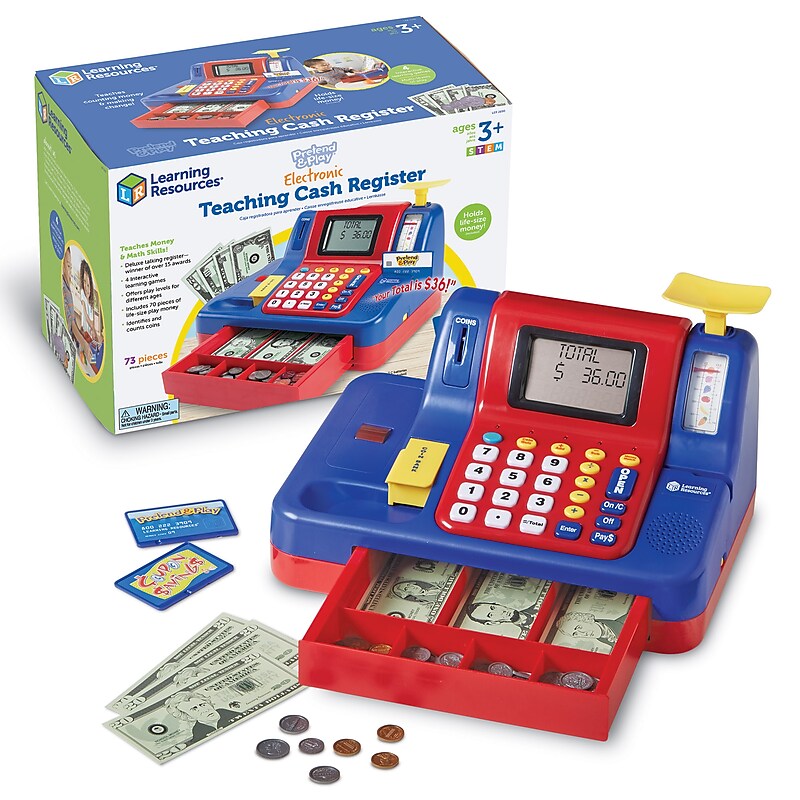
Learning Resources Teaching Cash Register (LER2690) image 1
Item: 845771
Model: LER2690

Learning Resources® Teaching cash register for grades pre-school - 3 helps to learn about money and its management. Cash register gives plenty of practice related to coin recognition, addition, subtraction and place value..Age group and grade: Ages 3 - 9 and grades pre school - 3rd.Subject: Money.Usage ideas: The eight brightly colored scoops encourage color identification while stacking the scoops on the cone promotes fine motor skills and to help pre scholars learn colors, each scoop is clearly marked on the inside with corresponding color.Cha-ching! playing store comes to life with this talking, interactive register.Rewards transactions with lights, sounds and voice messages, holds actual-size money and includes play coins and bills, coupon and credit card.Features a built in scanner, scale and coin slot.Helps children practice coin recognition, addition, subtraction and place value with 4 engaging games, and has cash register theme.Offers volume control.Includes play money, coupon and play credit card, automatic shut off saves on batteries.Small parts, not for children under 3 years.Learning money and basic math skills comes to life with this talking, interactive cash register.Students will have fun practicing coin identification, addition, subtraction and place-value as they play 4 games that increase in difficulty as players advance their math skill levels.Requires 3 "C" batteries (not included).Teaching cash register helps children to practice coin recognition, addition, subtraction and place value with 4 engaging games.

Price is  $86.79
1
2
3
4
5
6
7
8
9
10
11
12
13
14
15
16
17
18
19
20
21
22
23
24
25
26
27
28
29
30
Over 30
Add to list
No reviews yet

About Addition Learning Games

Addition learning games are engaging tools designed to help children master basic math skills in a fun and interactive way. These games encourage critical thinking and problem-solving while reinforcing addition concepts, making them ideal for both classroom and home learning environments.

By incorporating play into education, addition learning games make math enjoyable and less intimidating for young learners. They cater to various learning styles, ensuring that every child can find a game that resonates with them and enhances their understanding of addition.

When selecting addition learning games, consider features such as age appropriateness, educational value, and the ability to promote cooperative play. Many games are designed for multiple players, fostering teamwork and social skills while practicing math concepts.

Additionally, look for games that offer a variety of challenges and formats, such as board games, card games, and interactive activities. This diversity keeps children engaged and motivated to practice their addition skills, making learning a rewarding experience.

What are addition learning games?

  • Addition learning games are educational tools that help children practice and improve their addition skills through interactive play. They often incorporate fun themes and challenges to make learning enjoyable.

Why are addition learning games important?

  • These games are important because they reinforce foundational math skills in a playful manner, helping children develop confidence and proficiency in addition. They also promote critical thinking and problem-solving abilities.

What age group are addition learning games suitable for?

  • Addition learning games are typically designed for children in early elementary grades, usually from kindergarten through 5th grade. However, some games can be adapted for younger or older learners based on their skill levels.

Can addition learning games be used in the classroom?

  • Yes, addition learning games are excellent resources for classrooms as they encourage collaborative learning and can be used in small groups or centers. They help teachers create a dynamic learning environment that fosters engagement.

How do addition learning games enhance learning?

  • Addition learning games enhance learning by making math concepts tangible and relatable. They provide immediate feedback and rewards, which can motivate children to practice more and improve their skills over time.

Are there different types of addition learning games?

  • Yes, there are various types of addition learning games, including board games, card games, digital apps, and hands-on activities. This variety allows children to experience addition in multiple formats, catering to different learning preferences.