Computer Security Locks
61 results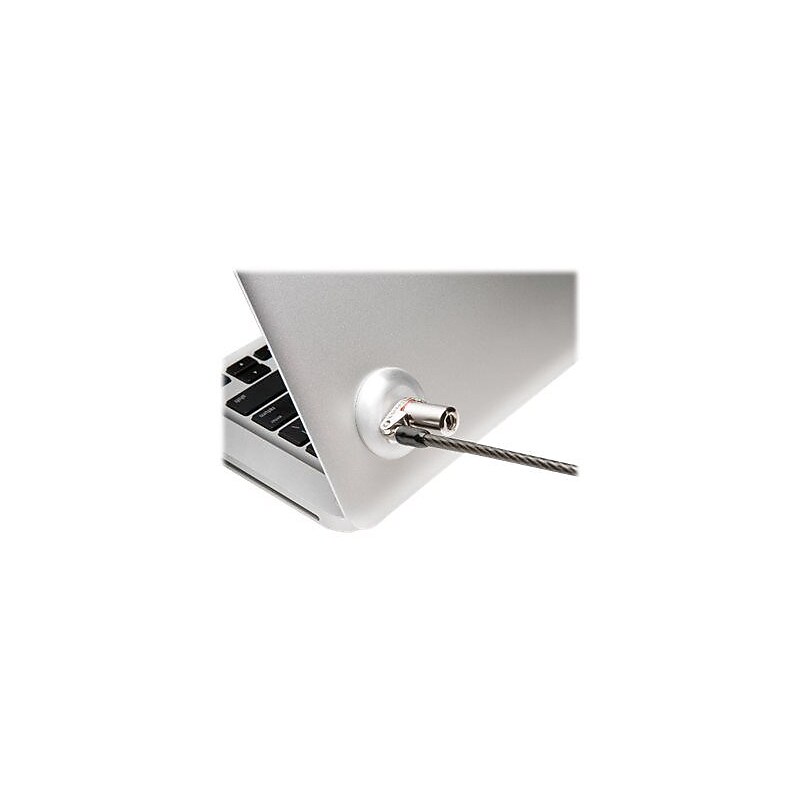
Kensington® K64995WW Security slot adapter kit features attractive K-slot adapter that is perfect to provide superior theft protection for Macbook Air and Ultrabooks without built-in security slot. It works well with all T-Bar™ locks and suitable for Ultrabook®, MacBook® as well as Chromebook™ laptops..comes in white/multicolor color for refined look.Macbook air and ultrabooks has attractive K-slot adapter for superior theft protection.Designed to work with all T-Bar™ locks.Perfect to use with Ultrabook, MacBook and chromebook.Contains security slot adapter and adhesive.Kensington® Security slot adapter kit includes K-slot adapter and ultra strong adhesive. Perfect for locking Ultrabook and other peripheral devices lacking K-slot.
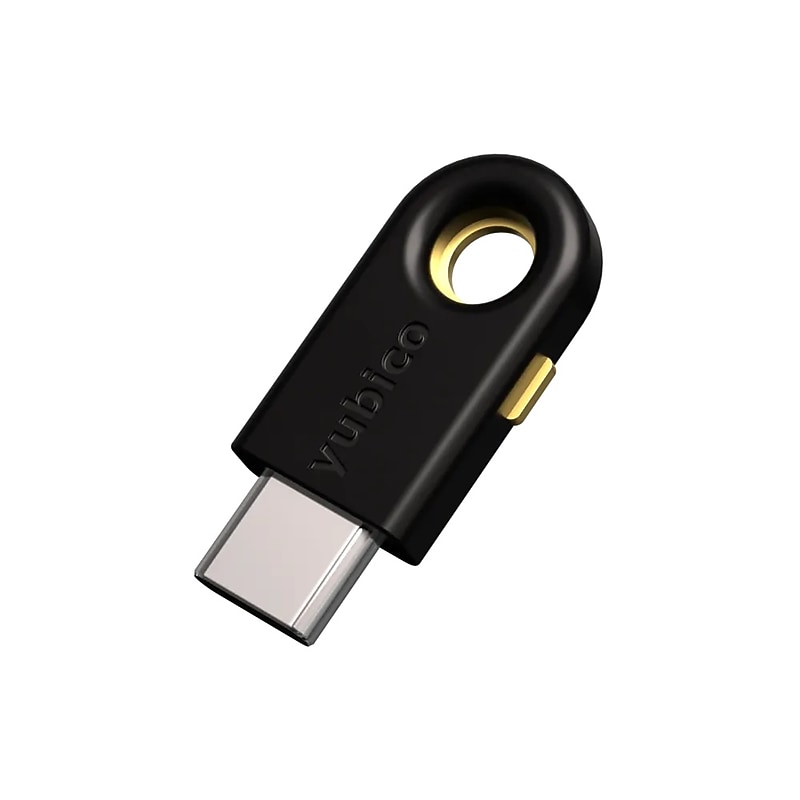
The YubiKey 5C is a compact, durable, and highly secure USB‑C security key designed to protect your digital accounts with modern, phishing‑resistant authentication. Supporting a wide range of protocols - including FIDO2/WebAuthn, U2F, Smart Card (PIV), Yubico OTP, OATH‑TOTP, OATH‑HOTP, OpenPGP, and more - it delivers versatile compatibility across Windows, macOS, ChromeOS, and Linux. Built with glass‑fiber reinforced plastic and rated IP68, it withstands water, dust, and crushing force for long‑term reliability. With no batteries, no network dependence, and simple plug‑and‑tap operation, the YubiKey 5C offers fast, dependable, passwordless login for both personal and enterprise use. Supported by major platforms like Google, Microsoft, AWS, Okta, and leading password managers, it’s a trusted key for strengthening your security everywhere..Designed as a USB‑C security key for strong multi‑factor authentication..Supports FIDO2, U2F, OTP, OATH, PIV, OpenPGP, and static passwords..Connects through a USB‑C interface for quick plug‑and‑use operation..Works with Windows, macOS, ChromeOS, and Linux platforms..Requires a USB‑C port and a supported service using authentication standards..Rated IP68 for resistance to water, dust, and harsh environments.
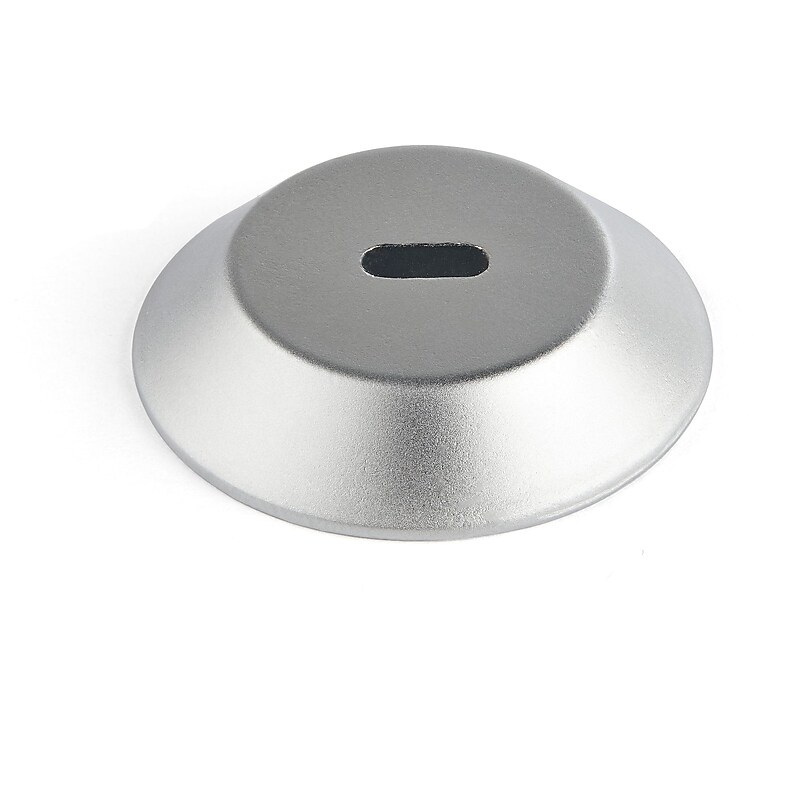
Security Slot Adapter Kit - K-Slot Lock Plate Adapter for Tablet/iPad/Computer/Monitor/Phone/Laptop - T-Bar Compatible - MacBook Pro/Air - Anti-theft - Slim Design - Silver (KSLTAD).ANTI-THEFT PROTECTION: Secure laptops, tablets, monitors, phones & MacBooks with this Security Slot Adapter Kit that lets you add a K-Slot to any device without a lock slot; Compatible w/ T-Bar Lock.INDUSTRIAL STRENGTH: Includes strong adhesive, alcohol wipe & surface preparation pad; Tested to withstand up to 296 lbs. of force (depending on surface).MULTIPURPOSE: This TAA compliant Security Slot Adapter Kit can be mounted to a wall, desk, or other flat surface to serve as an anchor point for a Kensington style K-Slot laptop lock cable.SLIM DESIGN: This low profile security slot adapter is 0.26" (6.7mm) thick, 1.29" (32.7mm) diameter & silver satin finish integrates seamlessly with ultra-thin laptops/computers & flat surface devices.UNIVERSAL COMPATIBILITY: Secure any device incl MacBook Pro/Air, Ultrabooks, iPad, Chromebooks, displays & tablets in spaces like classrooms or retail stores by adding a K-Slot laptop lock adapter.Security Slot Adapter Kit | Universal | 2-Year Warranty
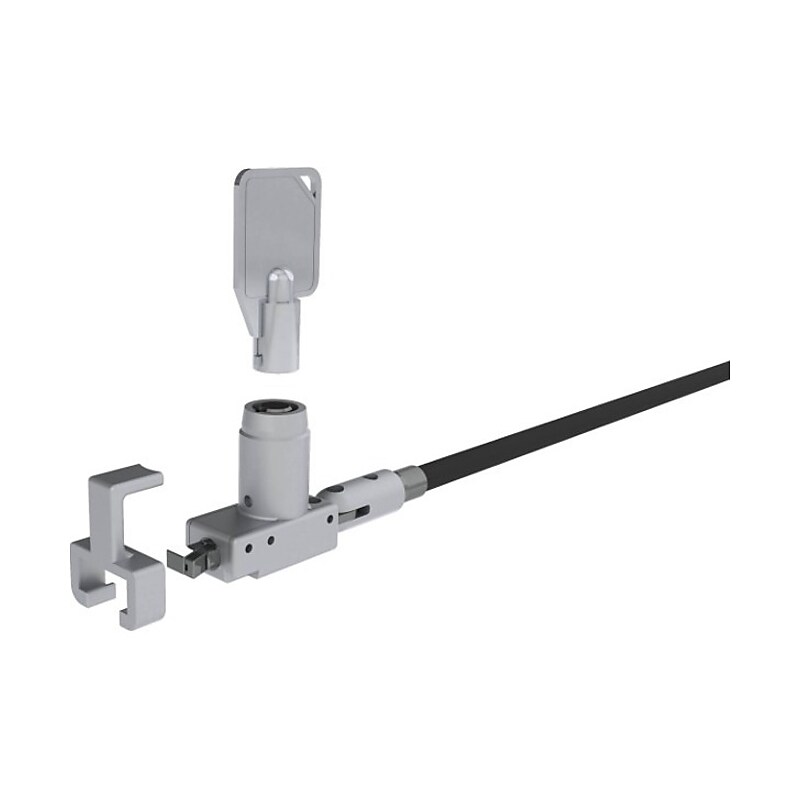
The Noble Locks TZ04T Compact Wedge Lock is the perfect security companion for your Dell laptop. This state of the art barrel key lock for Dell Latitude systems with the Noble Wedge Slot secures and protects your laptop and has many additional benefits. Noble's patented Wedge Security Slot is designed to fit the thinnest mobile devices made today and for the future. The rotating lock head allows for this product to have 360 degree of freedom making it easier to lock and unlock. This feature also allows the lock to rotate freely while still secured within the lock slot to help prevent theft. The Noble Wedge Lock is tested to withstand up to 150 lbs. / 68 kg. This locking system also includes the patented Noble peripheral cable trap allowing you to secure your power cables or other peripheral devices. The TZ04T Noble Compact Wedge Lock comes with the lock attached to a 6' reinforced steel cable, 2 keys, peripheral cable trap and a storage pouch. Noble offers a Two-year limited warranty on this product..6 ft cable length for faster, efficient execution of mounting to ensure maximum reliability.Notebook device supported according to your requirements with maximum productivity.Built with stainless steel product material to offer longevity and great resistance to damage and deterioration.Keyed Lock configuration type for feasible security
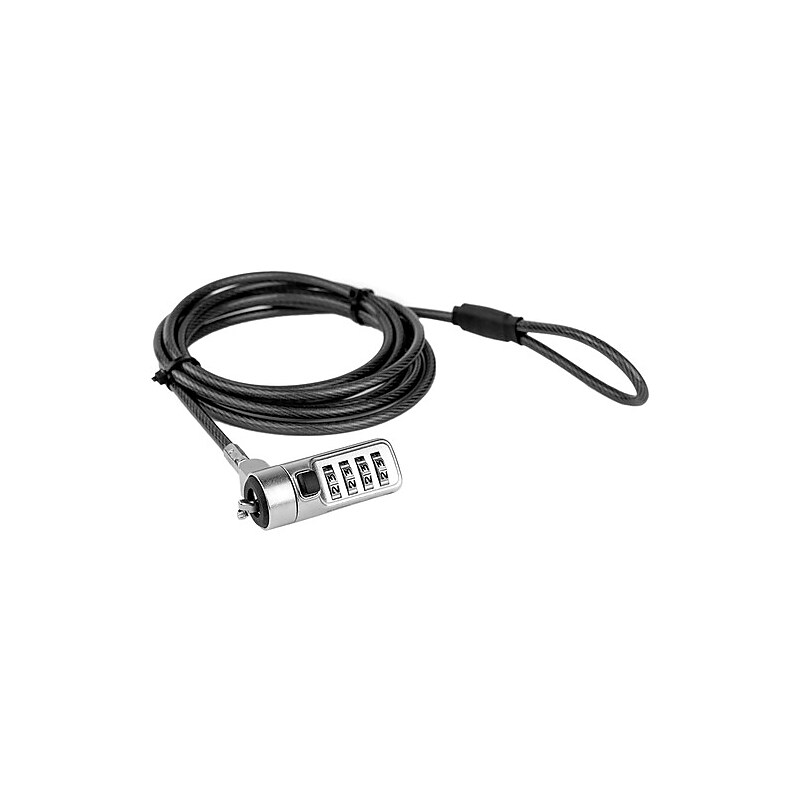
Keep your device safe against physical theft with the Rocbolt W21 Security Cable from Rocstor. Featuring a reliable, 6' long galvanized steel cable, you can properly tether your Noble WEDGELOCK equipped system to various fastening points to prevent theft. A resettable four-digit code combination adds an additional layer of security to your system..Cable Lock for Noble WEDGELOCK, with keyless code security perfect for securing devices in shared spaces..Features a 6 ft. length, offering ample reach and flexibility for secure positioning..Constructed from galvanized carbon steel with a sleek black finish for durability and style..Secured with a 4-digit combination lock for personalized, keyless access..Backed by a 3-year limited warranty.
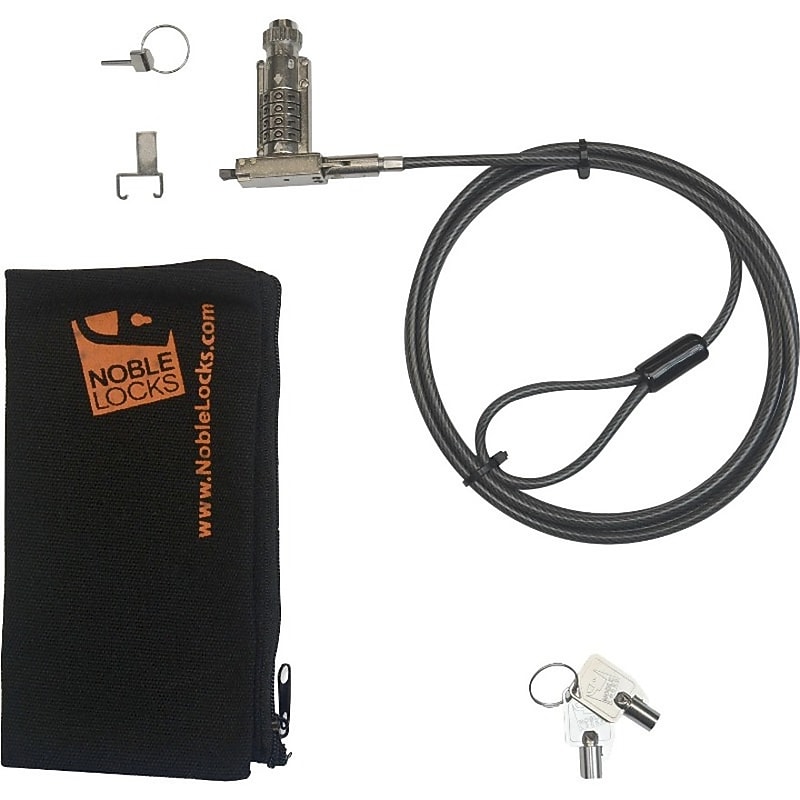
Combining our keyed Noble Wedge Lock slot design with the convenience of a combination solution, Noble brings you the TZ06T Keyed and Resettable Combination Wedge Lock gives owners the option of a convenient combination lock and key access. The key system allows access to open the lock, but will not reset the combination. This lock is also designed to be user-resettable allowing the owner of the lock to customize their combination with 10,000 different 4 digit possibilities. The Noble Wedge Lock is tested to withstand over 150 pounds force 5-way pull test. This system also includes the patented Noble peripheral cable trap allowing you to secure your power cables or other peripheral devices. The TZ06T Noble Wedge Lock comes with the lock attached to a 6 ft/1.82m reinforced steel cable, peripheral cable trap and a storage pouch. Noble offers a Two-year limited warranty on this product. The TZ06T is designed for Dell Latitude laptops featuring the Noble Wedge Lock slot..5.91 ft cable length help cable lock mounted in a dependable and timely manner with maximum productivity.Notebook device supported for better reliance and optimal performance.Built with zinc product material to offer great versatility and allow creativity and innovation in design and construction.Combination Lock/Keyed Lock configuration type for feasible security.Resettable lock configuration feature allows convenient code setting with dependable security efficiency
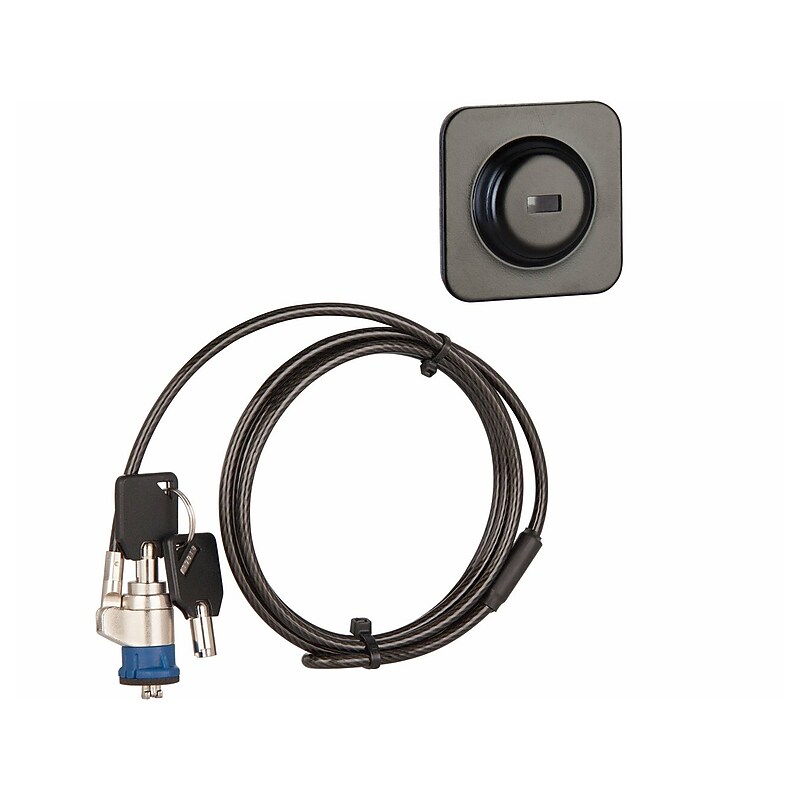
The Joy Factory LockDown key cable lock enables any device to become secure with this simple kit. The included security plate attaches to your device with a 3M VHB adhesive for a strong and semi-permanent bond. The plate features a Kensington security lock slot so it can be used with the included 6' key cable lock or any other Kensington compatible cable lock. Perfect for those devices that don't have a Kensington lock slot built-in or for any device that requires anti-theft security. It is the best solution for mobile device security..Key cable lock enables for any device to become secure with this simple kit.Dimensions: 1.5" x 1.5" plate; 6' steel cable.Security plate and cable lock housing are made of extremely strong and durable aluminum to withstand abuse and would-be thieves.Features a Kensington security lock slot so it can be used with the included 6' key cable lock or any other Kensington compatible cable lock.Security plate uses 3M VHB adhesive to adhere to any smooth and flat surface to create a strong and long-lasting bond.Can be used with virtually any phone, tablet, laptop, Chromebook, or just about any other device/item that has a smooth and flat surface.Easy-to-use push-lock capability for one-hand operation
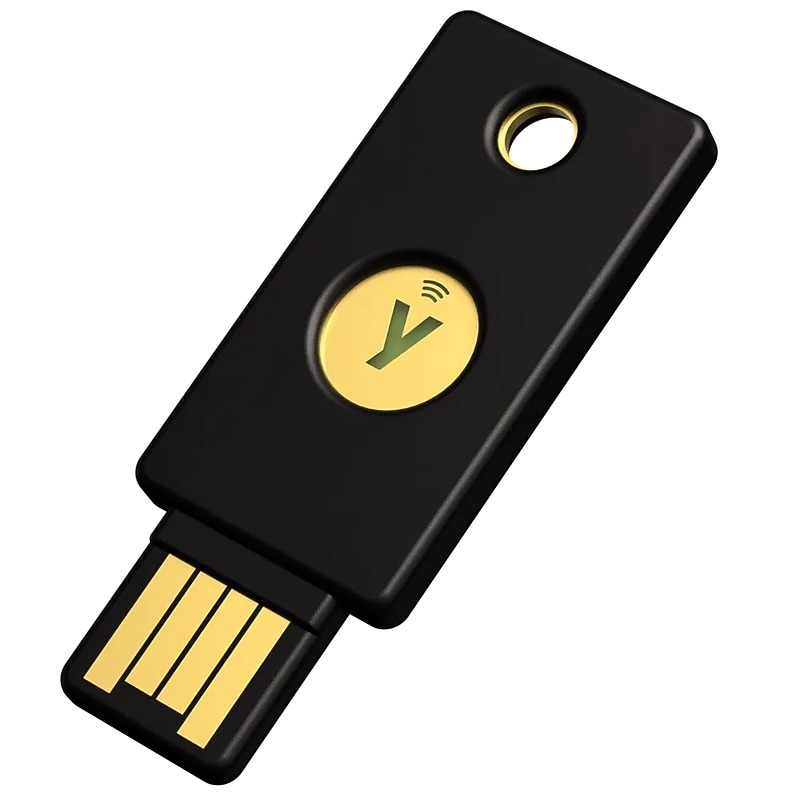
The Yubico YubiKey 5 NFC is a versatile, durable, and highly secure USB‑A and NFC‑enabled security key designed to protect your digital accounts with phishing‑resistant hardware authentication. Built for convenience, it attaches easily to any keychain and provides fast login by either plugging into a USB‑A port or tapping on an NFC‑enabled mobile device. Supporting a wide range of authentication protocols - including FIDO2/WebAuthn, U2F, Smart Card (PIV), Yubico OTP, OATH‑TOTP, OATH‑HOTP, and OpenPGP - it works seamlessly across Windows, macOS, ChromeOS, and Linux. Crafted from glass‑fiber reinforced plastic and rated IP68, the YubiKey 5 NFC withstands water, dust, and crushing force. Trusted by major enterprises and millions of users worldwide, it enables quick, reliable multi‑factor, passwordless, and single‑tap authentication for improved personal and professional security..Designed as a USB‑A and NFC key for secure multi‑factor authentication..Supports FIDO2, U2F, OTP, OATH, PIV, and OpenPGP standards..Uses USB‑A or NFC for fast, flexible authentication..Works with Windows, macOS, ChromeOS, and Linux..Requires a USB‑A port or an NFC‑enabled device for login..Rated IP68 for durability against water, dust, and impacts.
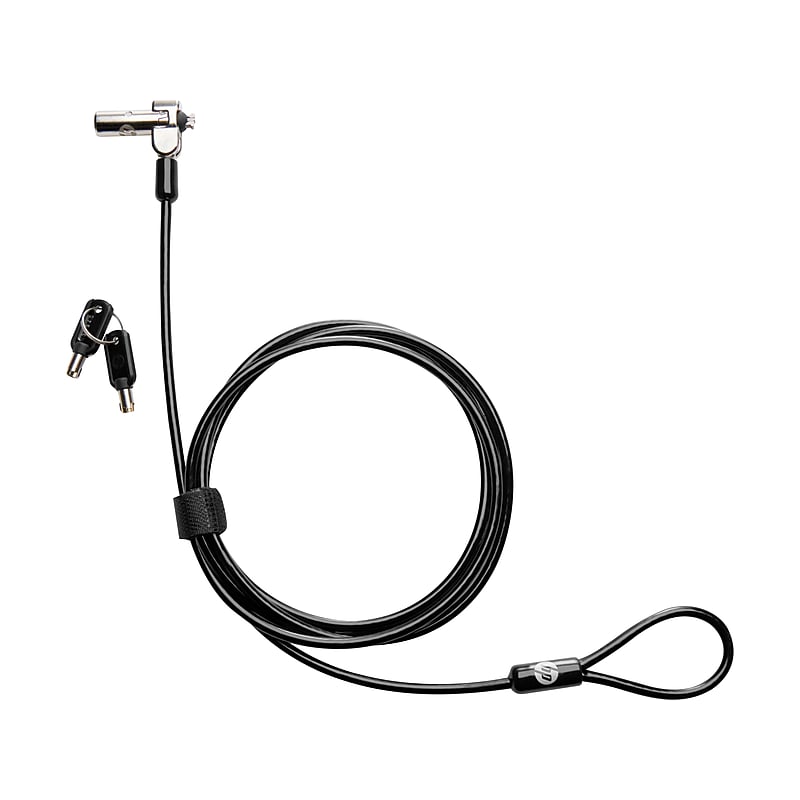
Lock your notebook or tablet down in the office and high-traffic public areas by tethering it to a secure surface with the thin profile HP Nano Keyed Cable Lock. Wrap the 6' vinyl-coated, galvanized steel cable around any secure object and attach to your notebook or tablet. Insert the key into the lock and turn clockwise 90 degrees..Keyed cable lock for use with notebooks or tablets.Cable length: 6'.Zinc alloy for lock body, stainless steel for tip, galvanized steel cable with PVC coating.Use the 360-degree range to position the cable lock head as needed.Compatible with HP Elite x2 1012 G2; HP Pro x2 612 G2.Includes: keyed cable lock, keys, and documentation.1-year manufacturer limited warranty
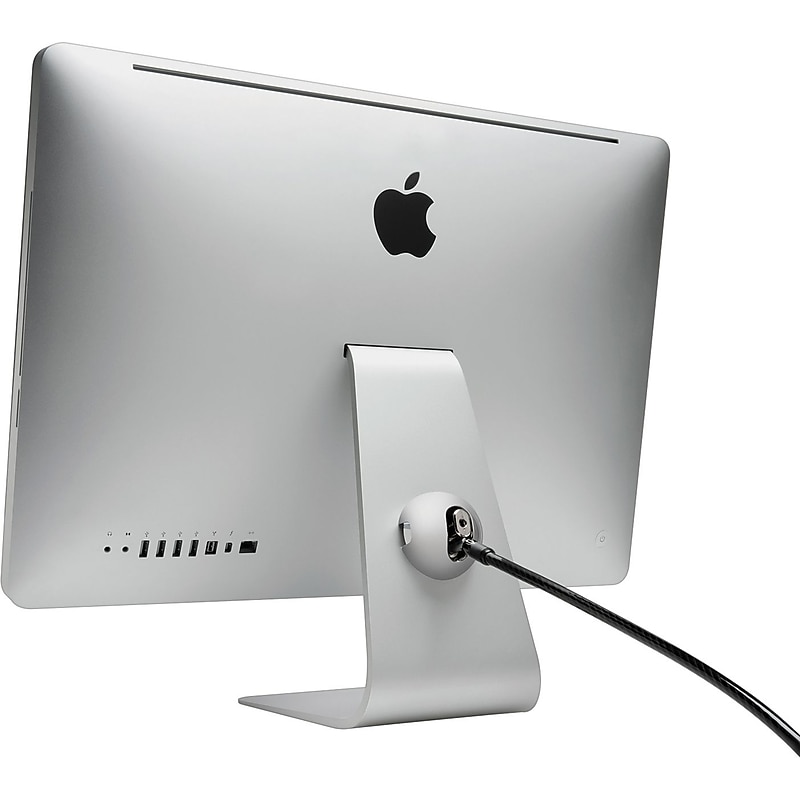
Kensington® K64962US SafeDome Secure keyed cable lock secures in just one click with ultra cable that provides high level of theft protection. It has sleek and modern dome design that attaches firmly to iMac stand and compliments iMac aesthetics. Lock measuring 7" x 2" x 7" features built-in cable management that securely manages iMac accessories such as mouse, keyboard and other peripherals. It does not interfere with iMac adjustability and is easy to position as well as assemble..Dome design complements iMac aesthetics.ClickSafe® lock secures with just one click — no keys and no fiddling.Ultra cable provides the highest level of security.Sleek, modern dome design securely attaches to iMac stand.Easy to position and assemble lock.Built-in cable management secures iMac accessories.Won´t interfere with iMac adjustability.Easy to position and assemble lock.Compatbility: 2010 and 2011 iMac models.Package contents: 2 x keys, cable lock.Kensington® SafeDome Secure keyed cable lock with dome design is perfect for securing MacBook Air®. It has built-in cable management that locks iMac accessories firmly.
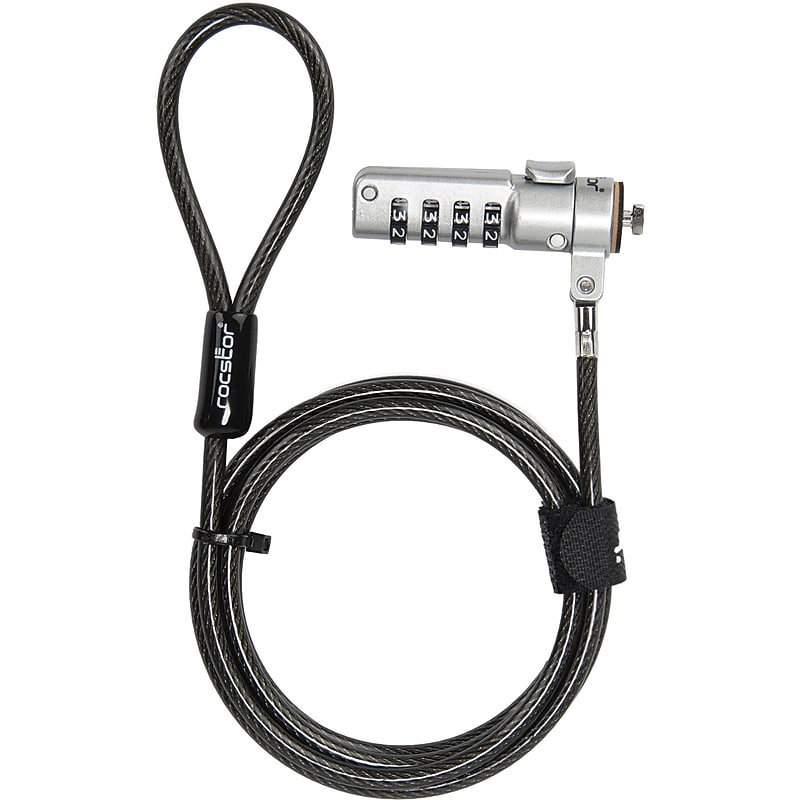
The Rocstor Rocbolt R22 Premium and Heavy-Duty 4-Digit Combination Cable with Slim Lock provides an enhanced security for your Slim and Ultra Laptops, Chromebooks, Desktops, Monitors, Docking Stations, Projectors and other compatible devices in offices, schools, and other public areas. Rocbolt security combo locks provide an exceptional asset security and helps to reduce theft. They are tested for torque/pull, foreign implements, lock lifecycle, corrosion, key strength, and other environmental conditions. Nearly thousands of notebooks and other portable devices are stolen everyday - protect your valuable assets by using the heavy-duty Rocbolt cable combination lock system. The push-button design enables one- hand operation for easy installation. Rocstor's Rocbolt R22 provides a strong and heavy-duty Slim lockhead system which prevents intruders tampering with the lock. Rocbolt lock comes with a preset combination which can be easily reset and provides a 6ft galvanized heavy-duty steel cable. Customers are able to order the Rocbolt R22 with an option of Like Keyed or Master Keyed configuration. Rocbolt security cables are affordable and have two (2) years of warranty..6 ft cable length help cable lock mounted in a dependable and timely manner with maximum productivity.Notebook device supported for better reliance and optimal performance.Built with carbon steel product material to offer great versatility and allow creativity and innovation in design and construction.Combination Lock configuration type for dependable security and optimal usability.4-digit locking combination for optimal security and maximum user convenience
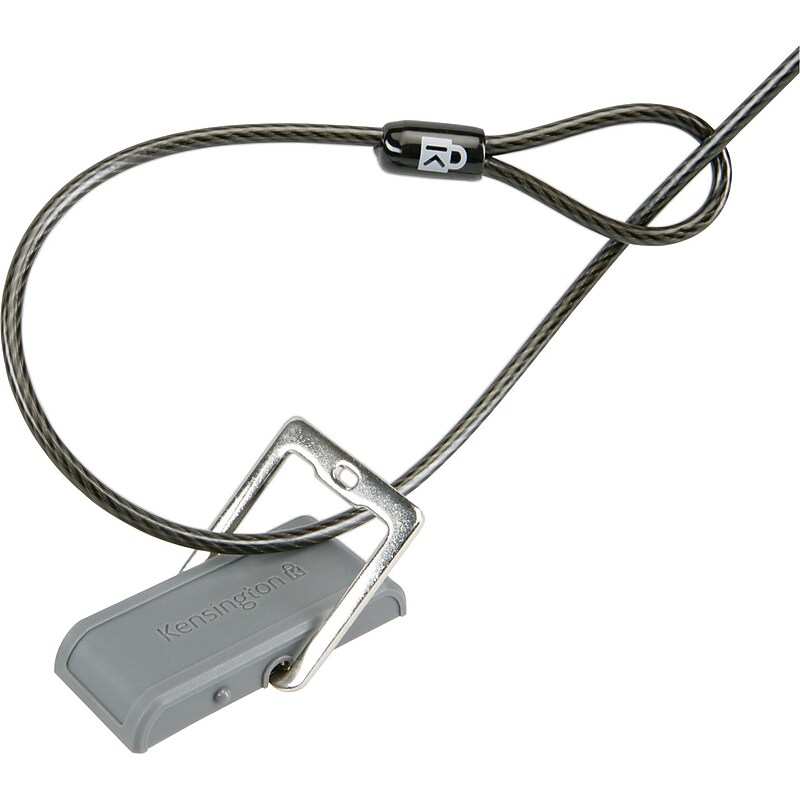
Add a secure anchor point to any work surface, providing employees with a convenient and easily accessible place to lock down their computer. The Kensington Desk Mount Cable Anchor attaches via either industrial-strength mounting tape or security screws..Provides a secure anchor to any work surface.Full steel construction base plate and ring with corrosion resistant chrome plating.2 x 3/4" one way slotted security woodscrews (self drilling) for maximum security.Convenient to use means no more searching for a strong anchor point under your desk or workstation.Industrial strength mounting tape provided for situations where screwing holes is not an option.Convenient to use means no more searching for a strong anchor point under your desk or workstation.Tamper-resistant features include 2 one-way security screws and full steel construction prevents cutting.TAA Compliant.Attractive design complements modern office décor.Built-in Kensington security slot.Gray.Maximum footprint: 1/2" H (Ring Down) - 2 1/4" (Ring Up) x 3 1/2" W x 1 3/4" D.Kensington Desk Mount Security Anchor Point
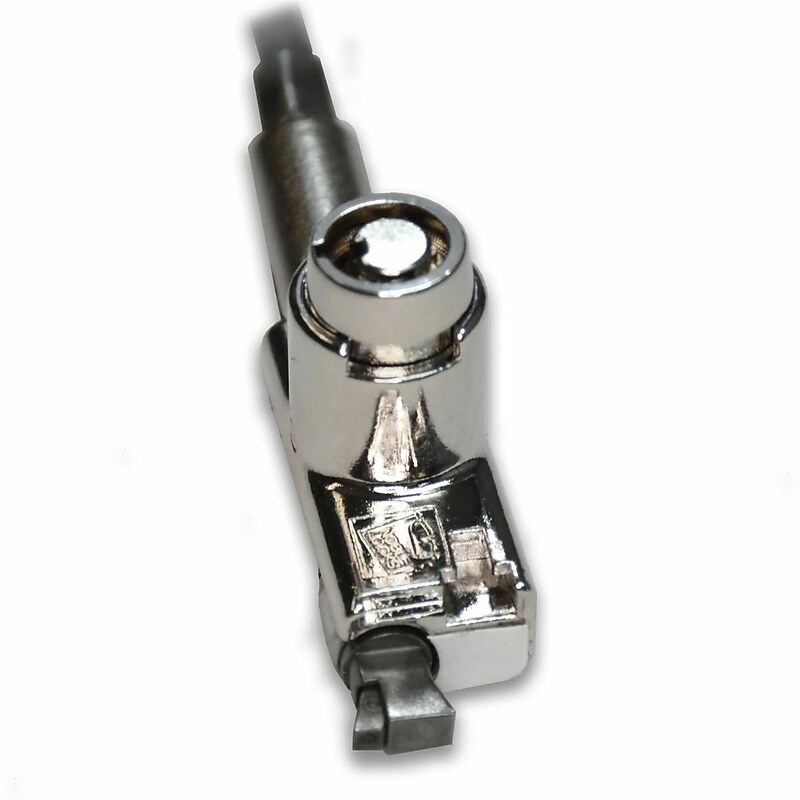
The Noble Locks TZ03T Ultra-Compact Wedge Lock is the most secure security solution with the smallest footprint for Dell laptops. The TZ03T weighs only 98g / 3.5oz and stands at a height of 2.8mm to the middle of the lock slot. Designed to meet the needs of shrinking laptop heights and minimal space to accommodate critical input/output ports. The TZ03T features Noble's patented 7mm inverted cylinder barrel key. This state of the art security Wedge lock is designed for laptops featuring the Noble Wedge® Slot. The rotating lock head allows for the TZ03T lock to have 360 degrees of freedom making it easier to lock and unlock. This feature also allows the lock to rotate freely while still secured within the lock slot to help prevent theft. The Noble Wedge Lock is tested in a 5-way pull test to withstand over 150 pounds-force. This locking system also includes the patented Noble peripheral cable trap, allowing you to secure your power cables or other peripheral devices. The TZ03T Ultra-Compact Wedge Lock is attached to a 6 ft/1.82m reinforced steel cable, and comes with 2 keys, a peripheral cable trap and a storage pouch. Noble Locks offers a 2-year limited warranty on this product. The TZ03T is designed for Dell Latitude laptops featuring the Noble Wedge lock slot. Check Noblelocks.com for compatibility for other laptops and notebooks..5.91 ft cable length for faster, efficient execution of mounting to ensure maximum reliability.Notebook device supported for better reliance and optimal performance.Built with hardened stainless steel product material to offer longevity and great resistance to damage and deterioration.Keyed Lock configuration type for feasible security.2 keys included for your convenience, feasibility, and optimal security productivity