Learning Charts for Classrooms

98 results
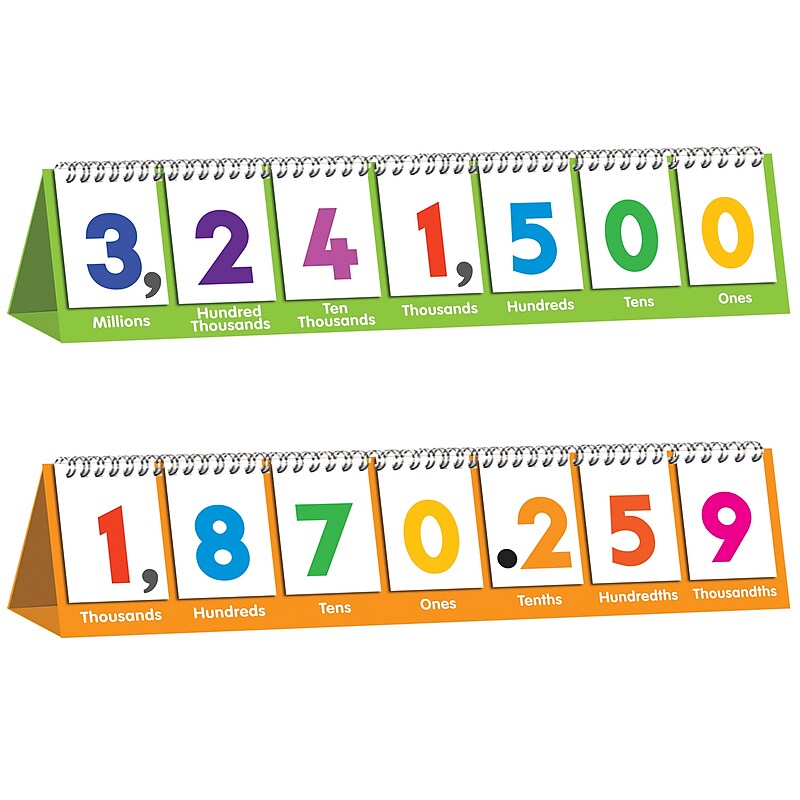
Junior Learning Ones to Millions Flip Stand, Double-sided Flip Stand (JRL453) image 1
Item: 24386186
Model: JRL453

Ones to Millions Flips is used for teaching place value and covers numbers ones to millions on one side and decimals on the other. Each place value has been color-coded to support learning. Practice adding or subtracting at different place value levels..Color-coded so that each place value can support learning.Practice adding or subtracting at different place value levels.A fun way to teach place value with a flip chart.Supports guided and independent learning.Teach place value and cover numbers 1 to millions on one side and decimals on the other side
Price is  $22.59
1
2
3
4
5
6
7
8
9
10
11
12
13
14
15
16
17
18
19
20
21
22
23
24
25
26
27
28
29
30
Over 30
Add to list
No reviews yet
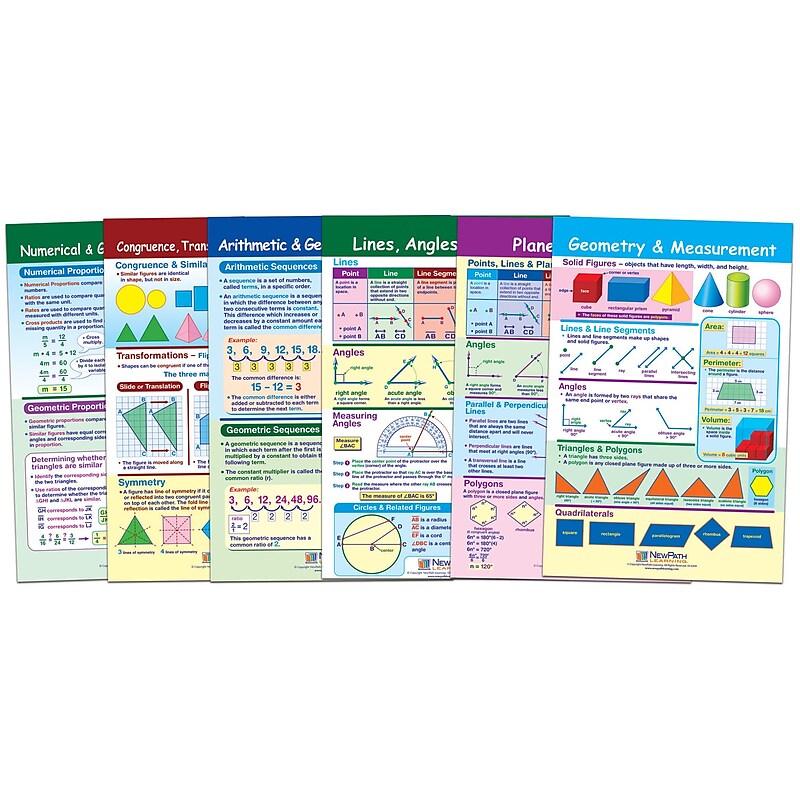
New Path, Geometry BB Set, 6/set (NP-936501) image 1
Item: 23999287
Model: NP-936501

Features a collection of separate posters, each covering a separate, curriculum topic. Uniquely designed, while one side can be posted for student reference, the reverse features dry-erase activities perfect for individual student review or as a learning center activities! Graphic images and hands-on activities combine to provide comprehensive coverage of essential student skills and cover the current state and national standards - including Common Core! Each 12" x 18" Chart is laminated and double-sided - Side 1 features a graphic overview of the topic and Side 2 provides "write-on/wipe-off" activities. Covers Geometry & Measurement; Lines, Angles & Circles; Congruence, Transformation & Symmetry; Plane Geometry; Arithmetic & Geometric Sequences; and Numerical & Geometric Proportions..Geometry.Bulletin Board Set.Measures 18" x 12"

Price is  $39.59
Unit of measure 6/Set
1
2
3
4
5
6
7
8
9
10
11
12
13
14
15
16
17
18
19
20
21
22
23
24
25
26
27
28
29
30
Over 30
Add to list
No reviews yet

About Learning Charts for Classrooms

Learning charts for classrooms are essential educational tools designed to enhance the learning experience for students of all ages. These visual aids help reinforce key concepts, making it easier for educators to convey information effectively and engage students in various subjects.

From daily schedules to math operations, learning charts serve as a constant visual reference that supports classroom instruction. They are particularly useful for creating an interactive learning environment, allowing students to participate actively in their education.

When selecting learning charts for classrooms, consider factors such as size, durability, and the specific educational topics covered. Many charts are designed for easy visibility, ensuring that all students can see and benefit from the information presented, regardless of classroom layout.

Additionally, look for charts that are versatile and can be used across multiple grades or subjects. Features like pocket charts allow for the inclusion of interchangeable cards, making it easy to adapt lessons and keep the content fresh and relevant for students.

What are learning charts used for in classrooms?

  • Learning charts are used to visually present information and concepts, aiding in teaching and reinforcing lessons. They help students grasp complex ideas through engaging visuals and organized layouts.

How can learning charts benefit students?

  • Learning charts enhance retention and understanding by providing visual stimuli that complement verbal instruction. They cater to different learning styles, making it easier for students to absorb and recall information.

What types of learning charts are available?

  • There are various types of learning charts, including subject-specific charts for math, science, and language arts, as well as organizational charts like schedules and calendars. Each type serves a unique purpose in supporting classroom learning.

Are learning charts suitable for all grade levels?

  • Yes, learning charts are available for all grade levels, from preschool to higher education. They can be tailored to meet the needs of different age groups and learning objectives.

How can teachers effectively use learning charts in their lessons?

  • Teachers can integrate learning charts into their lessons by referencing them during discussions, using them as prompts for student participation, or incorporating them into hands-on activities. This interactive approach fosters engagement and reinforces learning.

Can learning charts be reused or adapted for different lessons?

  • Many learning charts are designed to be reusable and adaptable, especially those with pockets for interchangeable cards. This flexibility allows teachers to update content as needed, making them a cost-effective resource for ongoing instruction.