

Portable Fire Extinguisher Buying Guide
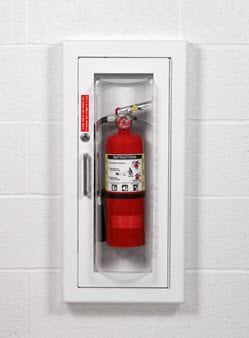
by Jary D. Winstead
Many small fires can be safely extinguished by a trained operator using a portable fire extinguisher. So purchasing extinguishers for your workplace of home can be an essential safety measure.
If you’re in the market for a portable fire extinguisher, it’s important to understand the different classifications so you can select the correct one. All portable fire extinguishers must be approved by a nationally recognized testing laboratory, such as FM Global, and listed by Underwriters Laboratories. The label will often show the designation letter that corresponds with the type of fire fuel it extinguishes. Using the wrong type of fire extinguisher can result in serious injuries and may not actually extinguish the fire.
Fire Fuel Classifications
- Class A Fuels include ordinary household combustible materials, such as wood, paper, rubber and most plastics
- Class B Fuels include flammable and combustible liquids, such as gasoline, gases, diesel, oil, thinner and alcohol
- Class C Fuels include energized electrical equipment, such as electric panels, appliances, wiring, motors and circuitry
- Class D Fuels include certain metals, such as metal shavings, metal powders, metal flakes, magnesium, aluminum, titanium, potassium, zinc, lithium and aluminum
- Class K Fuels include cooking oils often used in restaurants, such as deep-fryer oils, greases and fats
Portable fire extinguishers are available with extinguishing agents that will extinguish more than one classification of fuel fire. The most common multi-classification extinguishers are BC and ABC-type fire extinguishers. For example, an ABC-type portable fire extinguisher is designed to extinguish Class A, B and C fires.
Portable Fire Extinguisher Components
Components of a portable fire extinguisher include the canister, handle, nozzle, pressure gauge, safety pin, hose and extinguishing chemicals. (Note: Carbon dioxide fire extinguishers are not equipped with a pressure gauge.) Portable fire extinguishers are manufactured with plastic components, metal components or using both materials.
Portable fire extinguishers manufactured with plastic canisters, nozzle and handle assemblies may not be serviceable. It is important that fire extinguishers intended for use in a workplace setting are made with serviceable components and are capable of being recharged, so they meet the Occupational Safety and Health Administration (OSHA) standards for inspections, maintenance and servicing.
Portable Fire Extinguisher Size
Portable fire extinguishers are manufactured in various sizes, from one-pound canisters to large industrial extinguishers mounted on a cart or trailer. The size you need depends on the specific location for intended use. OSHA standards state that extinguishers are to be selected and distributed based on the classes of anticipated workplace fires as well as the size and degree of hazard that would affect their use. It’s a good idea to use that standard as a guide for extinguishers intended for residential fire protection.
If you select a portable fire extinguisher smaller than a 5-pound rating, it may be suitable for mounting in a vehicle or on equipment, but due to its size and limited use, it may not be suitable for residential use and is not recommended for the workplace or industrial use.
Portable Fire Extinguishers for Computers and Electronics
Some portable fire extinguishers are recommended specifically for computers and electronics. These are designed to extinguish a fire and leave little or no harmful residue that will damage a computer, stereo or other electrical components. Portable fire extinguishers containing a halon extinguishing agent or Class BC carbon dioxide portable fire extinguishers are recommended for computer, stereo and other electrical component fires.
Placement of Portable Fire Extinguishers
Portable fire extinguishers should be placed in readily accessible locations, near the area of intended use. Do not, for example, keep your fire extinguisher behind areas where combustibles or flammables are stored — that could pose a hazard when the extinguisher is needed. It’s always a good idea to store these safety devices near exits and along routes of egress.
The maximum distance between portable fire extinguishers can best be determined by adhering to OSHA’s standards and following your local and state fire codes. This information is also a good guide for residential fire protection. For example, there is a specific distance between where the extinguisher should go and where the hazardous material is:
- Class A fuels: The maximum travel distance is 75 feet
- Class B fuels: The maximum travel distance is 50 feet
- Class C fuels: The maximum travel distance is based on the specific hazard
- Class D fuels: The maximum travel distance is 75 feet
- Class K fuels: No distance requirements, but an extinguisher should be readily accessible
Knowing this information will help you determine how many extinguishers to purchase.
Jary D. Winstead is an occupational safety consultant and the owner of Work Safety Services.
This article provides general information, and is not intended to provide personalized legal or medical advice; please consult with your own advisor and review local/state/federal regulatory guidelines and requirements if you have any questions.